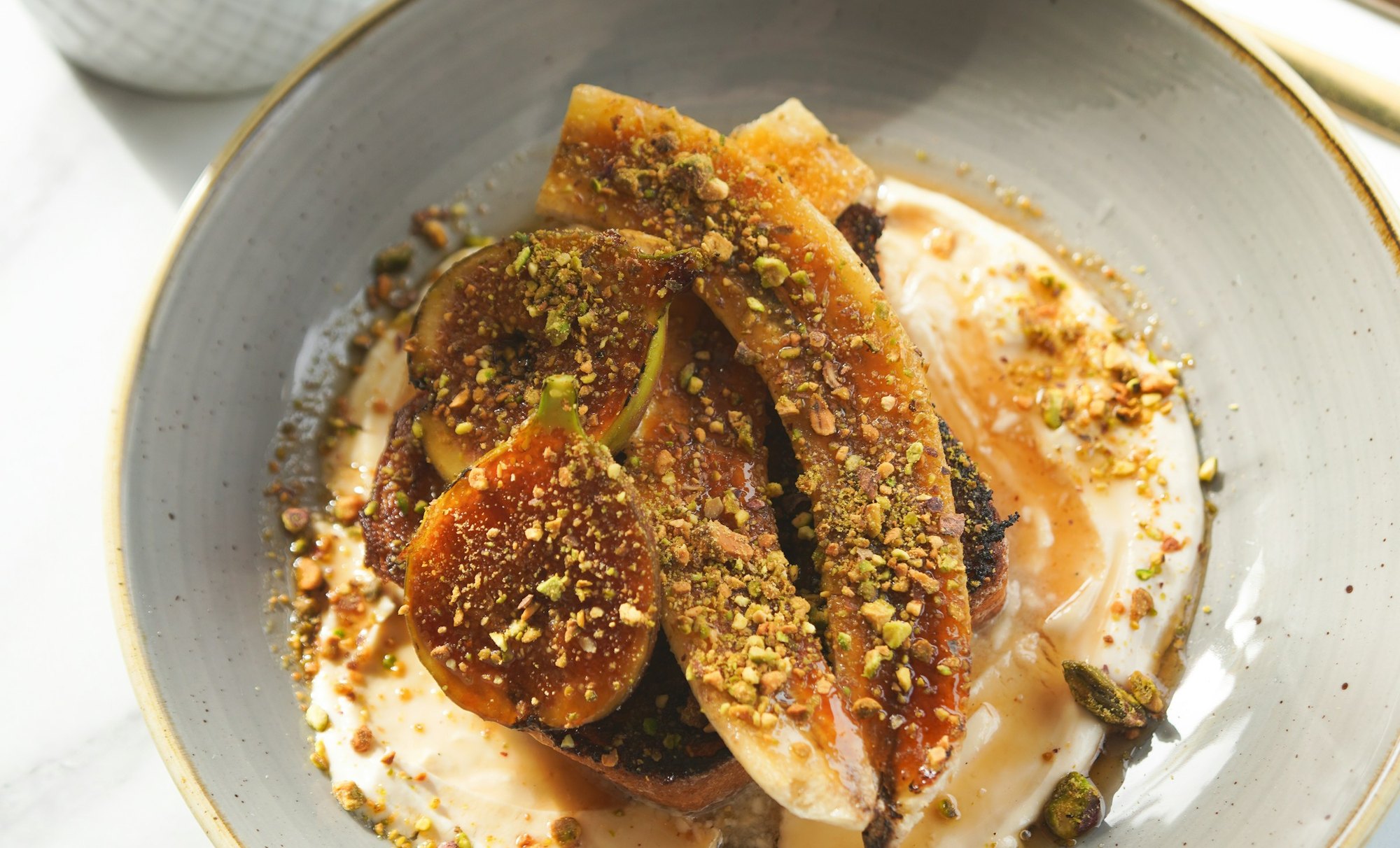
Dessert comes at the end, when the conversation is flowing and sometimes the appetite is gone. Maybe that is why it is often treated as an afterthought. For me, though, it is one of the moments that best reveals a restaurant’s personality.
It should not feel separate
A good dessert continues the story of the menu. If the kitchen works with seasonal produce, dessert should too; if the concept is traditional, the sweet course can be a heritage recipe done well. When dessert seems to belong to another restaurant, the experience loses coherence.
It can speak of origins
Many desserts tell you where the cook comes from: a family recipe, a sweet from their home country, a way of using an ingredient that recalls their childhood. In Miami, with so many cuisines side by side, dessert is often where that origin shows up most personally.
An ingredient or a memory
Sometimes a whole dessert revolves around a single ingredient: a fruit, a cacao, a coffee. Other times it reaches for a shared memory, something you recognize at the first bite. Either way, what makes it memorable is intention.
Closing with one last idea
Dessert is the last flavor you take home. A well-thought-out ending can round off a good meal, and a careless one can dim a great experience. That is why I always try to leave room for it, and why I pay attention to how the team presents it.
Next time you are about to ask for the check, give the last course a chance. It might sum up everything the restaurant wanted to say.